
Navigating Crypto News

CoinFeather
Navigating Crypto News

Quick market read from this story
Despite XRP's longest losing streak in a decade, Ripple's aggressive expansion into institutional finance and treasury management via GTreasury and HyperliquidX suggests a strategic build-out that could eventually drive demand.
Ripple's integration of XRP and RLUSD into GTreasury's $13 trillion payment system aims to embed digital assets into corporate finance workflows, potentially shifting demand drivers from speculation to utility.
The market's current disconnect between Ripple's enterprise progress and XRP's price weakness highlights a lack of immediate repricing catalysts, suggesting a 'wait-and-see' approach for traders.
Ripple's expansion into institutional trading via HyperliquidX and partnerships in payments with Convera signal a broader strategy to position XRPL and its stablecoin infrastructure as a regulated layer for global financial operations.
Deep Dive
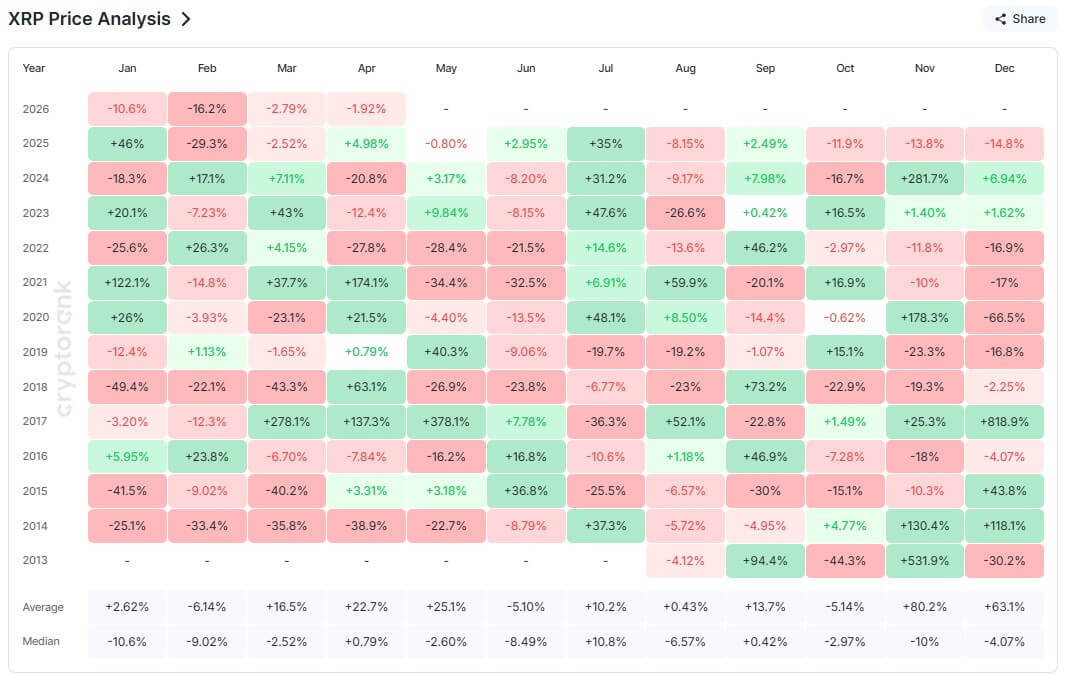
XRP is currently experiencing its longest losing streak since 2014, with the token declining for six consecutive months since October 2025. Despite this price weakness, Ripple, the company behind XRP, is aggressively expanding its services in corporate finance, institutional trading, and cross-border payments. This disconnect raises questions about why Ripple's business momentum is not translating into XRP's price performance.
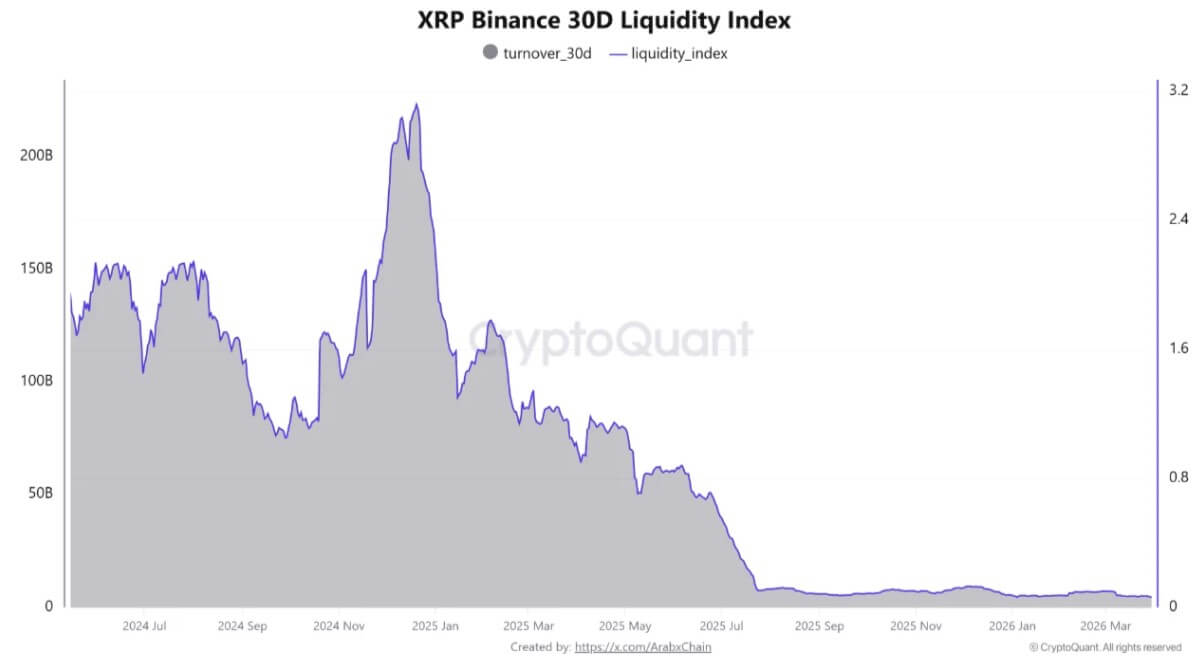
XRP has fallen approximately 10% on average each month over the past six months, resulting in a total loss of over 55% and trading at $1.33. This downturn mirrors a broader risk-off sentiment in the digital asset market, with Bitcoin also experiencing a significant retreat. Data from CryptoQuant indicates a decline in XRP's 30-day liquidity index on Binance to about 0.062, suggesting thinner order books and increased vulnerability to price swings.
Ripple is integrating digital assets directly into corporate treasury management systems. Through its acquisition of GTreasury, Ripple launched Digital Asset Accounts and Unified Treasury, allowing finance teams to manage XRP, RLUSD stablecoin, and other tokens alongside traditional cash balances. GTreasury processed $13 trillion in payments last year, providing Ripple with an established corporate channel. This move aims to embed XRP into routine corporate finance infrastructure, with 72% of surveyed finance leaders indicating a need for digital asset solutions to remain competitive.
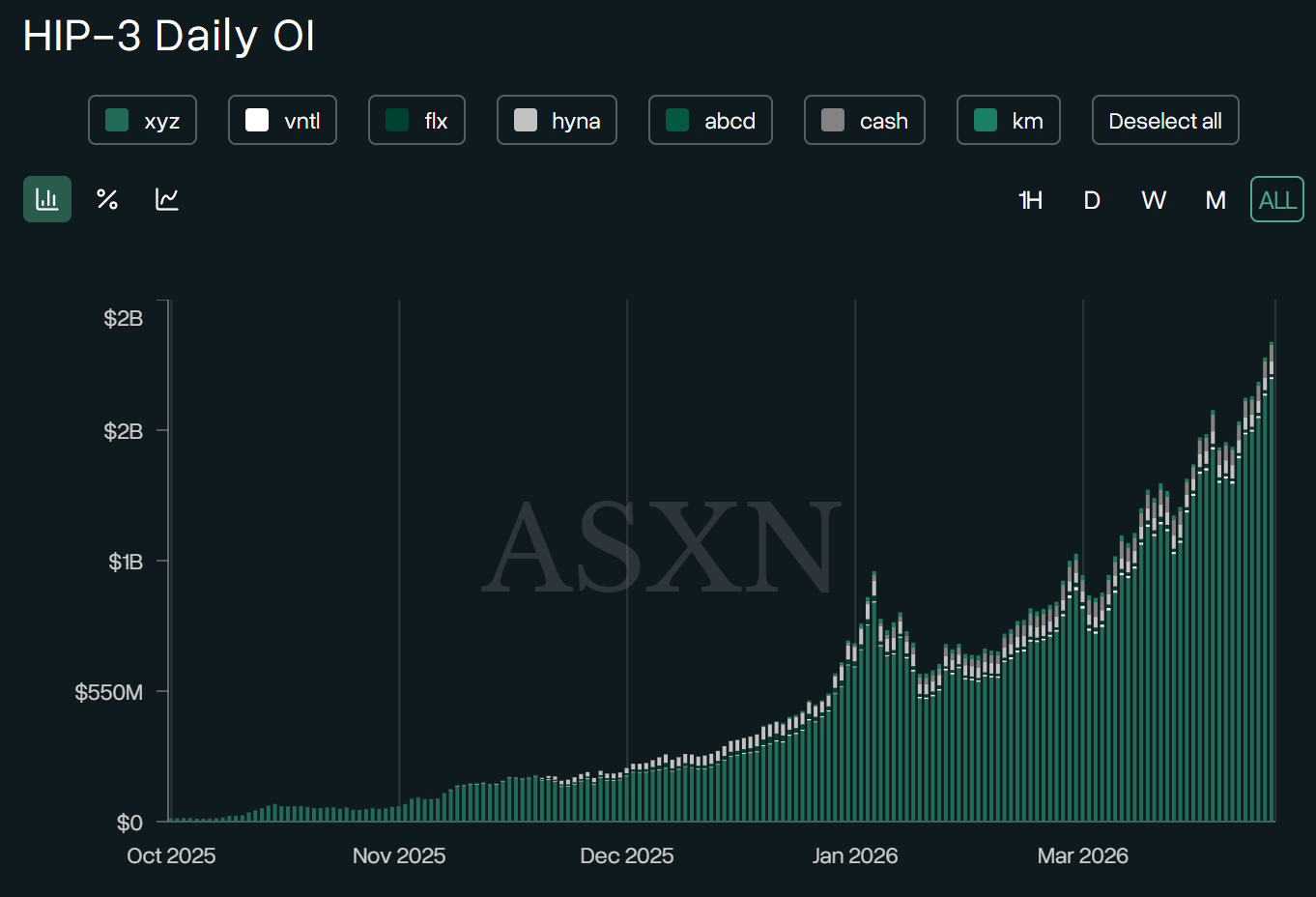
Ripple Prime, the company's institutional trading platform, has expanded its integration with HyperliquidX to include HIP-3 assets. This provides institutional clients access to on-chain perpetual contracts for traditional assets like gold and silver, alongside crypto. This integration offers operational simplicity, allowing institutions to manage these positions without separate Web3 wallets or direct smart contract interaction. Hyperliquid has become a leading decentralized perpetuals platform, with over $5 billion in open interest.
Ripple is also enhancing its payments infrastructure by integrating RLUSD, XRPL, and its enterprise network. A partnership with Convera aims to improve global payments using stablecoins within a fiat-to-fiat framework. Ripple has also joined the Monetary Authority of Singapore's BLOOM initiative to test cross-border trade settlement using XRPL and RLUSD. Furthermore, XRPL is being adapted for regulated institutional use through permissioned domains and exchanges, positioning it as a regulated operating layer for financial transactions.
Despite Ripple's significant business advancements, XRP's price has not yet reflected this momentum, largely due to the market distinguishing between Ripple's enterprise progress and XRP's direct utility. However, these efforts could foster conditions for XRP's recovery by increasing familiarity within corporate finance, improving market structure, and reinforcing the network's relevance in tokenized money movement. Bitrue Research suggests XRP could reach $2.00 by September, with a more optimistic scenario of $2.50 contingent on RLUSD adoption and regulatory support.
Source, catalyst, and sector overlap from the latest feed.
Bitcoin is holding near $68,000, demonstrating resilience despite escalating geopolitical tensions and a surge in oil prices, indicating underlying spot buying pressure rather than leveraged speculation. The market is currently driven by external geopolitical events, specifically the US-Iran conflict and its impact on oil prices, rather than internal crypto catalysts, creating a fragile trading environment. Negative funding rates suggest that short sellers are still paying to maintain bearish positions, which could fuel a sharper upward move if Bitcoin breaks through resistance and triggers liquidations. Bitcoin's price action is highly sensitive to geopolitical developments, with a narrow trading range between $65,000 and $70,000 amplifying potential short-term volatility based on US-Iran relations.
Polymarket's introduction of its own stablecoin, Polymarket USD, backed 1:1 by native USDC, does not directly reduce USDC's market cap as it represents a rebranding of collateral rather than a withdrawal of funds. The shift from USDC.e to Polymarket USD on the platform streamlines user experience and gives Polymarket greater control over its collateral and yield economics, reducing reliance on bridged assets. This development highlights a growing trend of layered stablecoin ecosystems where platform-specific tokens interface with users, while underlying assets like USDC serve as foundational collateral, making market analysis more complex. While not a direct threat to USDC's market cap, the structural change introduces new dependencies on Polymarket's redemption design and operational controls, adding a layer of risk for users.
XRP is exhibiting capitulation behavior with long-term holders realizing significant daily losses, indicating selling pressure driven by risk reduction rather than profit-taking. Despite positive developments in Ripple's legal standing and business expansion, XRP's price action is characterized by a fragile structure due to underwater buyers and defensive leveraged traders, preventing durable recoveries. While spot markets show continued demand, the negative sentiment in XRP's derivatives market and recent ETF outflows suggest a lack of conviction for a near-term trend reversal, keeping the asset in a state of suspension.
The departure of key Aave contributors (BGD Labs, ACI, Chaos Labs) creates a significant operational void, potentially impacting Aave's risk management and governance execution during the critical V3/V4 transition. Aave Labs is consolidating functions previously handled by external teams, aiming for faster execution and clearer responsibility, but faces the challenge of replicating the operational density of the previous federated model. Despite contributor exits, Aave's strong market position in DeFi lending, evidenced by its TVL and stablecoin dominance, provides a structural resilience, though a second operational incident could erode confidence. The recent wstETH liquidation event, though minor in financial terms, highlights the operational risks during the V3/V4 overlap and underscores the importance of Aave Labs successfully managing the new integrated structure.
The SEC's decision on intermediary definitions for tokenized stocks will determine whether blockchain innovation primarily benefits incumbents or opens new revenue streams for decentralized infrastructure like wallets and smart contract platforms. A ruling favoring Citadel Securities' broad interpretation of intermediaries could keep tokenized equities within traditional financial wrappers, limiting disruption and preserving existing fee structures. Conversely, adopting the Blockchain Association's narrower, function-based view could foster competition by allowing decentralized applications to capture value, potentially accelerating broader adoption of on-chain equity trading. The current $946 million tokenized stock market serves as a test case, with the SEC's framework poised to shape the future control and economic distribution of a potentially trillion-dollar asset class.
Actress Milla Jovovich has co-developed MemPalace, an open-source AI knowledge tool inspired by the memory palace technique, potentially offering a novel approach to information organization and retrieval in AI systems. While the concept is innovative, its real-world performance and adoption remain unproven, necessitating observation of community deployment and validation beyond initial benchmark tests. The involvement of Ben Sigman from Libre Labs, a Bitcoin lending platform, suggests potential intersections between AI development and existing blockchain infrastructure, though direct crypto asset integration is not specified.
Metaspins is positioning itself as a leading Web3 crypto casino by emphasizing high RTP games, provably fair technology, and fast-paced gameplay, aiming to attract crypto enthusiasts seeking transparent and engaging online gaming experiences. The platform's focus on proprietary 'Originals' like Plinko, Mines, and Keno, which offer high RTP (up to 99%) and strategic elements, suggests a strategy to differentiate from traditional online casinos and capture market share within the growing Web3 gaming sector. By integrating crypto payments and a user-friendly interface across devices, Metaspins is leveraging blockchain technology to enhance convenience and trust, signaling a broader trend of crypto adoption in the online entertainment industry.
The scrutiny over World Liberty's (WLFI) partnership with AB DAO, due to alleged ties to sanctioned entities, raises significant governance and due diligence concerns for the Trump-linked crypto venture. Despite WLFI's claims of no association with sanctioned individuals, the investigation highlights potential reputational risks and the need for enhanced vetting in crypto partnerships, especially those involving politically connected entities. The development could lead to increased regulatory attention and investor caution regarding projects with complex or opaque affiliations, potentially impacting WLFI's market perception and future collaborations.
Solana Foundation's 'Don't waste time with crypto' campaign signals a strategic pivot towards positioning the network as invisible infrastructure for AI-driven economic activity, aiming for seamless, automated agentic payments. The campaign highlights Solana's focus on high throughput and low transaction costs as critical for powering 'agentic payments,' suggesting a potential competitive advantage in the emerging AI-powered internet economy. This marketing shift implies that the future of crypto adoption may lie in its utility as background infrastructure for AI agents, rather than direct consumer interaction, potentially influencing investor perception of network value.
Cardano whale wallets have increased by 5.2% over nine weeks to 424, indicating accumulation at lower price levels despite ADA's recent 4% decline. The divergence between whale accumulation and negative derivatives sentiment, with short positions dominating, suggests a cautious market outlook despite on-chain accumulation. Potential Mastercard integration discussions could drive future adoption and transaction activity for ADA, though current price action remains near critical support at $0.24. The Cardano Foundation's backing of governance actions and treasury plans signals ongoing network development, but immediate price impact is unclear.
US House members are questioning the CFTC's oversight of insider trading on prediction markets, signaling potential regulatory scrutiny that could impact platforms like Kalshi and Polymarket. While the CFTC affirmed its authority over prediction markets, concerns about "morally obscene" event contracts and suspicious trades suggest a heightened risk of regulatory action or new legislation. The ongoing legal battles and congressional inquiries into prediction markets indicate a developing regulatory landscape that traders should monitor closely for potential impacts on market access and operation.
Solana DEX Stabble's urgent liquidity withdrawal request, prompted by concerns over a developer linked to North Korea, highlights significant security and vetting vulnerabilities within the DeFi ecosystem. The incident, while not a confirmed exploit, has eroded LP confidence and underscores the ongoing risk posed by state-sponsored actors infiltrating crypto projects through false identities. Stabble's new team is attempting to rebuild trust through audits and enhanced controls, but the communication strategy has drawn criticism, indicating potential challenges in restoring platform credibility. This event serves as a cautionary tale for DeFi protocols regarding due diligence and the critical need for robust identity verification processes to mitigate geopolitical and security risks.
SpaceX's potential IPO, targeting a $1.75 trillion valuation and possibly using the $SPCX ticker, signals significant institutional interest and a major liquidity event for the aerospace sector. The planned extensive retail investor allocation, potentially up to 30%, suggests a strategy to leverage community support and could set a precedent for future large-cap IPOs, impacting broader market sentiment towards direct retail participation. The emergence of leveraged ETF filings tied to SpaceX stock post-listing indicates anticipation of significant price volatility and provides a potential avenue for speculative trading strategies around the IPO event.
Upcoming CPI data and FOMC minutes are poised to introduce significant volatility into the crypto market, as these macroeconomic indicators will heavily influence interest rate expectations. Traders should monitor the March CPI report on April 10th for inflation trends, as higher-than-expected figures could trigger selling pressure, while lower figures may support price appreciation. The release of FOMC minutes on April 8th will provide insight into the Federal Reserve's monetary policy stance, with a dovish outlook potentially benefiting crypto prices and a hawkish one posing a risk. Anticipate potential liquidity shifts and trading activity fluctuations due to major token unlocks scheduled for the upcoming week.
AAVE's price decline to a near two-year low is directly linked to the departure of Chaos Labs, a key risk management operator, signaling potential instability in Aave's DAO governance and operational continuity. The exit of multiple core contributors, including Chaos Labs and BGD Labs, raises concerns about Aave's internal alignment and the sustainability of its decentralized operational model, potentially impacting investor confidence. Despite the recent V4 protocol launch, AAVE's significant price drop highlights that ongoing governance disputes and contributor departures are overshadowing technological advancements in the short term. With LlamaRisk becoming the sole risk manager and Aave Labs providing additional support, the market will closely monitor the effectiveness of this transition in maintaining protocol security and stability.
Live Feed
Loading the broader stream in the same flow as the homepage feed.
Check back shortly for newer market coverage.
Signal context only. Validate with price action, liquidity, and risk limits before taking a position.
