
Navigating Crypto News

CoinFeather
Navigating Crypto News
Quick market read from this story
Bitcoin experienced a significant price drop to $66,000, driven by a shift in geopolitical sentiment related to Iran, causing it to erase recent gains and trade below key technical levels.
Despite the broader market downturn, specific altcoins like STO, NOM, and ONT are showing resilience and outperforming due to their own organic catalysts, suggesting sector-specific opportunities amidst macro-driven volatility.
ONT's recent surge is attributed to a significant partnership with European officials for the eIDAS 2.0 framework, highlighting the potential for real-world adoption to drive token value independently of broader market sentiment.
The market is exhibiting a divergence where macro-economic and geopolitical news heavily impacts major assets like BTC and ETH, while individual project developments and partnerships are creating isolated bullish narratives for select altcoins.
Deep Dive
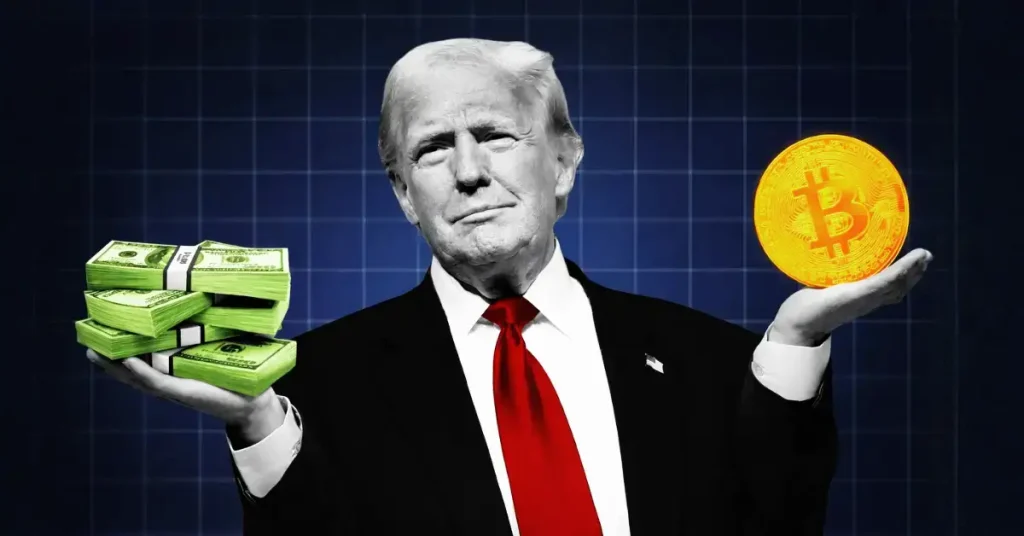
The cryptocurrency market experienced significant volatility on Thursday, with Bitcoin (BTC) slipping to $66,000, erasing gains made after positive news regarding a de-escalation in geopolitical tensions. The price drop of 3.24% over 24 hours, accompanied by negative volume, followed a shift in President Donald Trump's stance towards Iran. Major altcoins such as Ethereum, XRP, Solana, BNB, and Dogecoin also registered extended losses.
Bitcoin failed to break above the $71,985 resistance level, which corresponds to the 61.8% Fibonacci retracement, and subsequently declined towards $65,030. Another significant resistance is observed at $69,200. Following a breakout from a rising channel near $67,200, Bitcoin is now trading below the SMA 100. A further decline below $65,000 could see support at $64,200. Conversely, any escalation in war news might push Bitcoin to close above $68,000.
Despite the general market downturn, several altcoins demonstrated resilience and outperformance. StakeStone's governance token, STO, surged nearly 300% in 24 hours before retracing 60% from its daily high. It traded at $0.8404, still up 226% with a 684% increase in volume. Technical indicators suggest bullish momentum, though the growth trend may slow without corrections. If social media sentiment remains positive, STO could target $1.2.
Nomina (NOM), formerly OMNI and backed by Coinbase, saw a significant spike, trading at $0.01031, up 65% for the day and nearly 400% over the week. This performance occurred despite delisting news from the Bithumb exchange and scrutiny from Korean exchanges. Current indicators suggest neutral trading between $0.010 and $0.012, with support at $0.00569 if the trend falters.
Ontology (ONT) experienced a notable surge, trading at $0.1164, up 11.17% in 24 hours and 112% in a week. This rally was fueled by its partnership with European officials to develop the eIDAS 2.0 framework, aiming to provide identity wallets for 450 million citizens by the end of 2026. Whale activity and high trading volumes in Korean markets also contributed. Technical analysis indicates a successful breakout from an upward channel, with the price trading above the Ichimoku Cloud and a bullish MACD signal. If the price holds above the channel, ONT could trade above $0.12, with support at $0.104 in case of a trend reversal.
Source, catalyst, and sector overlap from the latest feed.
Zcash (ZEC) is showing structural resilience near $260, with its price movement increasingly tied to the growing demand for digital privacy infrastructure amidst intensifying global surveillance debates. The current consolidation phase for ZEC, defending macro support around $260, suggests a potential breakout is imminent if resistance at $300-$320 is decisively cleared, potentially leading to near-term gains towards $380-$450. Long-term price predictions for ZEC range up to $7000 by 2030, driven by its positioning as a privacy-centric asset and potential adoption in enterprise blockchain use cases, contingent on sustained demand and technological relevance. Recent catalysts include a resurgence in the privacy narrative, which has driven price spikes, alongside developer activity and ecosystem support, indicating continued confidence in Zcash's long-term prospects.
Filecoin's price action shows early stabilization near $0.80-$0.90, suggesting potential for a trend reversal if resistance at $1.20 is decisively broken. Analysts project FIL could reach $3-$10 in 2026 and potentially $50 by 2030, driven by increasing decentralized storage demand and network utility upgrades like Filecoin OnChain Cloud. While current price action is consolidating, improving on-chain metrics and whale accumulation in late 2025 provide a foundation for potential upside, contingent on sustained market recovery. The article presents long-term price predictions for FIL, indicating a bullish outlook based on fundamental growth in decentralized storage and network relevance.
Bitcoin is navigating a period of price uncertainty, with analysts identifying key support levels at $55K-$56K, $43K-$44K, and a significant zone between $32K-$36K for potential demand recovery. Despite potential short-term bounces towards $74K-$75K, the current market cycle suggests that upside movements may be gradual and lack strong momentum, characteristic of a cooling-off phase after a rally. A drop to the $32K-$36K range would represent a ~50% correction, a pattern historically observed in Bitcoin's cycles, indicating that such significant pullbacks are not unusual for the asset. The market's behavior around the $56K support level is critical; holding above it could offer temporary relief, while a break below may signal a clear shift towards further downside momentum.
Delays in Pi Network's mainnet migration and user concerns over price growth indicate a potential loss of community engagement and mining activity, which could negatively impact the ecosystem's development. The project's future success is perceived by users to be heavily reliant on significant price appreciation, suggesting that a lack of perceived financial return could deter new investors and active participants. Pi Network needs to address user frustration by improving communication, accelerating the mainnet migration, and building confidence in long-term value to rebuild trust and foster renewed user activity.
Macro analyst Jim Willie predicts XRP could surge to $25, linking its potential rise to systemic stress in traditional finance and the need for bailouts, suggesting XRP could act as a "device" for Wall Street. The analyst posits that major financial institutions are coordinating behind the scenes to influence regulatory frameworks like the 'Clarity Act,' which could impact digital identity, staking, and dividends, potentially benefiting XRP as a neutral bridge asset. XRP's potential price appreciation is framed by the analyst as a consequence of a global credit crisis and distrust in payment systems, where XRP could eliminate correspondent bank escrow and streamline trillions in capital.
The scrutiny over World Liberty's (WLFI) partnership with AB DAO, due to alleged ties to sanctioned entities, raises significant governance and due diligence concerns for the Trump-linked crypto venture. Despite WLFI's claims of no association with sanctioned individuals, the investigation highlights potential reputational risks and the need for enhanced vetting in crypto partnerships, especially those involving politically connected entities. The development could lead to increased regulatory attention and investor caution regarding projects with complex or opaque affiliations, potentially impacting WLFI's market perception and future collaborations.
Cardano whale wallets have increased by 5.2% over nine weeks to 424, indicating accumulation at lower price levels despite ADA's recent 4% decline. The divergence between whale accumulation and negative derivatives sentiment, with short positions dominating, suggests a cautious market outlook despite on-chain accumulation. Potential Mastercard integration discussions could drive future adoption and transaction activity for ADA, though current price action remains near critical support at $0.24. The Cardano Foundation's backing of governance actions and treasury plans signals ongoing network development, but immediate price impact is unclear.
Ripple's expansion into Africa, driven by a 52% YoY surge in on-chain activity and regulatory clarity in key nations, signals a strategic focus on a high-growth emerging market. The emphasis on RLUSD adoption and partnerships with regional fintechs like Chipper Cash and Yellow Card indicates Ripple's intent to leverage stablecoins for institutional payments and financial infrastructure in Africa. The development highlights a trend of established crypto firms targeting regions with increasing regulatory frameworks and significant on-chain growth, potentially unlocking new avenues for adoption and revenue.
Cardano whale wallets holding 10 million ADA or more have reached a four-month high of 424, indicating increased accumulation and potential bullish sentiment from large investors despite recent price volatility. The sustained accumulation by whales could serve as a catalyst for retail investor interest, potentially driving increased trading volume and supporting ADA's price recovery if current support levels hold. Potential partnership talks between EMURGO and Mastercard, if successful, could significantly boost ADA's utility and adoption for everyday transactions, positively influencing its long-term price outlook. Despite positive whale accumulation signals, ADA is currently trading below $0.25 and faces a risk of testing $0.22 support if the $0.24 level is breached, highlighting immediate price sensitivity to market sentiment and broader altcoin sector rotation.
Over 100 major banks are actively testing Ripple's payment solutions, indicating significant institutional interest in leveraging blockchain for cross-border transactions and treasury management. Ripple's integration with SWIFT and its Treasury platform, supporting XRP and RLUSD, positions it as a key infrastructure provider bridging traditional finance with digital assets, enhancing efficiency and compliance. The widespread testing by established banks suggests a pragmatic adoption of blockchain technology to improve existing financial systems rather than a disruptive overhaul, potentially leading to increased demand for Ripple's services.
Geopolitical de-escalation via a U.S.-Iran ceasefire has triggered a significant risk-on sentiment, driving Bitcoin above $72,000 and boosting other risk assets. The ceasefire announcement led to a collapse in oil prices, alleviating inflation fears that had previously capped Bitcoin's upside and pressured traders into bearish positions. Liquidation of nearly $600 million in leveraged crypto futures, predominantly short bets, indicates strong bullish momentum and a potential short squeeze, reinforcing upward price pressure.
Geopolitical de-escalation between the USA and Iran triggered a significant risk-on rally in crypto markets, with Bitcoin and Ethereum experiencing notable price increases. The surge was amplified by substantial short liquidations, indicating that a portion of the price action was driven by forced covering rather than purely organic buying pressure. While the broader market benefited from the ceasefire news, Zcash exhibited unusual outperformance, suggesting independent project-specific catalysts are at play. The market's rapid repricing highlights crypto's sensitivity to macro inflection points and embedded leverage, with potential for swift reversals if geopolitical tensions re-emerge.
Solana DEX Stabble urged users to withdraw liquidity due to a former CTO's alleged ties to North Korean hackers, causing a 62% drop in TVL. The incident highlights ongoing security concerns within the DeFi space, particularly concerning state-sponsored hacking groups. While no exploit occurred on Stabble, the rapid TVL decline underscores user sensitivity to perceived security risks, especially following recent large-scale exploits on Solana. The Solana Foundation's recent security initiatives may be tested by such events, indicating a continued need for robust security measures across the ecosystem.
Bitcoin long-term wallets have absorbed over 4.37 million BTC, indicating sustained supply reduction and a potential precursor to a bull market phase. The Bitcoin network activity index has entered a 'bull phase,' signaling increased network usage and potentially stronger market sentiment. Reduced inflows from centralized exchanges and a decrease in active addresses suggest a shift towards long-term holding, tightening liquid supply and reducing short-term trading pressure. Despite low active address momentum, historical patterns suggest this can align with profitable accumulation phases for long-term holders.
MicroStrategy's continued Bitcoin accumulation despite a significant unrealized loss highlights a conviction in its long-term treasury strategy, signaling to the market that short-term price volatility is secondary to its core objective of expanding BTC reserves. The company's focus on 'BTC Yield' and 'BTC Gain' metrics, alongside the utilization of preferred stock (STRC) for funding, indicates a sophisticated, albeit unconventional, approach to managing its Bitcoin-centric balance sheet and financing future acquisitions. Despite reporting a $14.46 billion unrealized loss, the narrative around MicroStrategy's Bitcoin holdings remains centered on long-term value preservation, with the company leveraging accounting benefits like tax credits to mitigate immediate financial pressure. The ongoing debate between Michael Saylor's bullish Bitcoin outlook and critical perspectives like Peter Schiff's underscores the speculative nature and divided sentiment surrounding MicroStrategy's aggressive Bitcoin treasury strategy.
Live Feed
Loading the broader stream in the same flow as the homepage feed.
Check back shortly for newer market coverage.
Signal context only. Validate with price action, liquidity, and risk limits before taking a position.
