
Decrypt Coverage
Full Decrypt crypto feed with immediate sentiment and action context for each headline.
Context filters
Narrow this source stream by time window.

Solana Exchange Stabble Warns Users to Pull Liquidity After North Korean Hacker Scare
Solana DEX Stabble urged users to withdraw liquidity due to a former CTO's alleged ties to North Korean hackers, causing a 62% drop in TVL. The incident highlights ongoing security concerns within the DeFi space, particularly concerning state-sponsored hacking groups. While no exploit occurred on Stabble, the rapid TVL decline underscores user sensitivity to perceived security risks, especially following recent large-scale exploits on Solana. The Solana Foundation's recent security initiatives may be tested by such events, indicating a continued need for robust security measures across the ecosystem.

Trump DOJ Rejects Tornado Cash Developer’s Newest Argument for Dismissal
Prosecutors are pushing back against Tornado Cash developer Roman Storm's attempt to use a recent Supreme Court ruling for dismissal, arguing it is not applicable to his case. The DOJ's stance highlights a continued aggressive prosecution of crypto developers despite some signals of a more favorable stance from the Trump administration. The legal battle underscores the ongoing tension between crypto privacy advocacy and regulatory enforcement, with potential implications for other developers in similar situations. The rejection of Storm's argument suggests the retrial will proceed, focusing on charges of conspiracy to commit money laundering and sanctions evasion.

Aave Token Falls Near 2-Year Low as Risk Management Firm Becomes Latest to Depart
AAVE's price decline to a near two-year low is directly linked to the departure of Chaos Labs, a key risk management operator, signaling potential instability in Aave's DAO governance and operational continuity. The exit of multiple core contributors, including Chaos Labs and BGD Labs, raises concerns about Aave's internal alignment and the sustainability of its decentralized operational model, potentially impacting investor confidence. Despite the recent V4 protocol launch, AAVE's significant price drop highlights that ongoing governance disputes and contributor departures are overshadowing technological advancements in the short term. With LlamaRisk becoming the sole risk manager and Aave Labs providing additional support, the market will closely monitor the effectiveness of this transition in maintaining protocol security and stability.
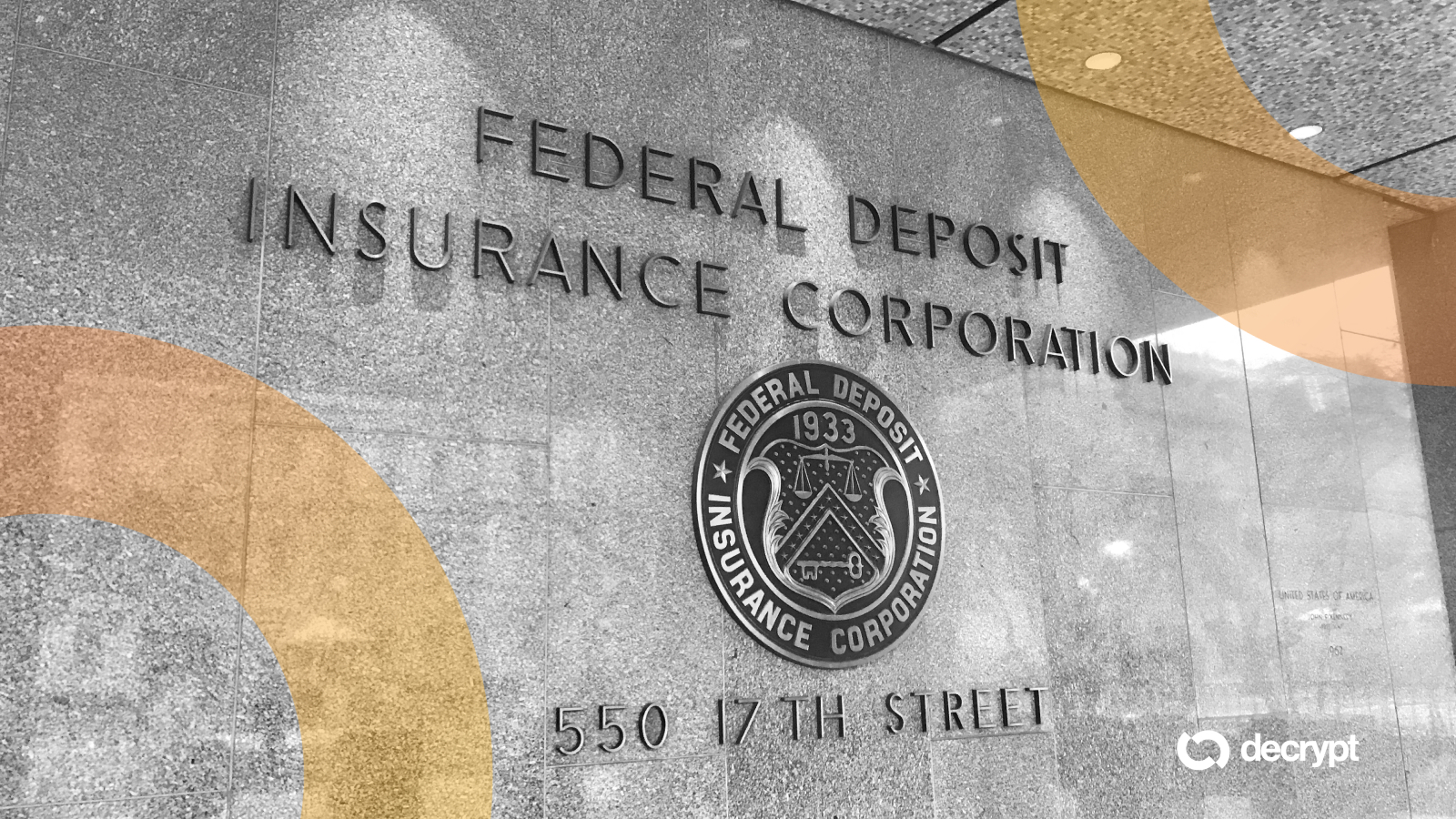
FDIC Reveals Proposed Rules for Stablecoin Issuers Under GENIUS Act
The FDIC’s proposal establishes federal oversight standards for stablecoin issuers while explicitly excluding tokens from deposit insurance protections.
Bitcoin Threatens to Break Support as Trump Threatens to Destroy Iran
Geopolitical tensions and threats of conflict are increasing market volatility, leading Bitcoin to test key support levels as traders price in potential downside risks. Technical indicators suggest a bearish outlook for Bitcoin, with multiple failed recovery attempts and bearish chart patterns indicating a potential drop to $55,000 if current support breaks. Despite bearish technicals, the market is not yet showing strong trend confirmation, leaving room for potential reversals if bullish catalysts emerge, though current conditions favor caution. The article highlights Bitcoin's increasing correlation with traditional risk assets during geopolitical crises, questioning its role as a safe-haven asset.

'Captive Audience' Could Drive Demand for Morgan Stanley's Bitcoin ETF: Bloomberg Analyst
Morgan Stanley's entry into the Bitcoin ETF market with a competitive 0.14% fee, undercutting BlackRock's 0.25%, positions it to capture significant market share despite being a late entrant. The bank's extensive network of 16,000 financial advisors provides a 'captive audience' and a strong distribution channel, potentially driving substantial adoption for its new Bitcoin Trust. While unlikely to surpass BlackRock's established ETF, Morgan Stanley's strategic pricing and internal distribution capabilities suggest a strong performance and increased competition in the spot Bitcoin ETF landscape.

Fifth Element Star Milla Jovovich Reveals AI Memory Tool MemPalace
Actress Milla Jovovich has co-developed MemPalace, an open-source AI knowledge tool inspired by the memory palace technique, potentially offering a novel approach to information organization and retrieval in AI systems. While the concept is innovative, its real-world performance and adoption remain unproven, necessitating observation of community deployment and validation beyond initial benchmark tests. The involvement of Ben Sigman from Libre Labs, a Bitcoin lending platform, suggests potential intersections between AI development and existing blockchain infrastructure, though direct crypto asset integration is not specified.

Solana Foundation to Help Secure DeFi Protocols Following $285 Million Drift Hack
The Solana Foundation's STRIDE program represents a proactive institutionalization of security for DeFi protocols, directly addressing the systemic risks highlighted by the recent $285 million Drift exploit. This initiative signals a maturation of the Solana ecosystem, moving beyond individual audits to offer ongoing, tiered security services, which could enhance investor confidence and reduce future exploit potential. The program's tiered approach based on TVL suggests a strategic allocation of resources, prioritizing larger protocols that pose greater systemic risk, a model that may be adopted by other Layer 1s.

Phone Logs Show Seven Calls Between Milei and LIBRA Backer on Launch Night: Report
New phone logs suggest Argentine President Javier Milei had more direct communication with a LIBRA meme coin backer on launch night than previously disclosed, potentially reopening investigations into his alleged ties. The emergence of seven calls between Milei and a LIBRA entrepreneur, alongside references to regular payments, challenges prior exonerations and could impact perceptions of presidential involvement in crypto scandals. While no direct evidence of Milei receiving payments has surfaced, the ongoing federal probe and new communications raise questions about the integrity of crypto promotions and the need for clearer disclosure regulations.
XRP ETFs Outpace Bitcoin as Crypto Funds Bounce Back After Down Week
XRP ETFs experienced significant inflows ($119.6M), outperforming Bitcoin and indicating a potential shift in institutional interest driven by regional regulatory clarity, particularly in Europe. Overall crypto investment products saw a net inflow of $224M, reversing a down week, with Switzerland leading global activity ($157.5M) over the U.S. ($27.5M), suggesting a geographic rotation in capital deployment. Ethereum continues to face outflows ($52.8M), highlighting persistent regulatory uncertainty impacting investor sentiment towards the asset, contrasting with XRP's recent strong performance. The strong rebound in Bitcoin ETF inflows ($471.3M on Monday) suggests that despite XRP's recent surge, Bitcoin remains a primary focus for institutional capital, especially with renewed positive momentum.

CME Set to Launch Avalanche, Sui Futures Ahead of 24/7 Crypto Derivatives Trading Shift
CME Group's expansion into AVAX and SUI futures signifies growing institutional interest in a broader range of altcoins beyond Bitcoin and Ethereum, potentially increasing demand and liquidity for these assets. The launch of new futures contracts, coupled with CME's upcoming 24/7 trading shift, suggests an evolving derivatives market infrastructure that could attract more sophisticated trading strategies and capital into the crypto space. The addition of AVAX and SUI futures provides regulated avenues for market participants to hedge or speculate on these Layer 1 tokens, enhancing capital efficiency and potentially influencing their price discovery mechanisms.

Proposed Ethereum Standard Aims to Help AI Agents Execute Complex DeFi Trades
The proposed Ethereum ERC-8211 standard would allow complex, multi-step blockchain actions to run in one transaction.

Devs Are Making Claude Talk Like a Caveman to Cut Costs—And It Works
Developers are finding novel ways to optimize AI model costs by manipulating output verbosity, directly impacting operational expenses for AI-driven applications. The 'caveman' prompt engineering technique demonstrates a significant, albeit unconventional, method for reducing token usage, potentially influencing how AI services are priced and utilized. While the cost savings are substantial for output tokens, input tokens remain a major cost driver, suggesting that further optimization strategies will be needed for comprehensive cost reduction. The viral adoption of this technique on platforms like GitHub highlights a community-driven approach to AI efficiency, potentially leading to broader adoption of similar cost-saving measures.

$11.4B Lost to Crypto Scams in 2025: FBI Internet Crime Report
The FBI's 2025 report highlights a significant 22% increase in crypto fraud losses to $11.4 billion, indicating a growing threat that impacts market confidence and investor protection. Older Americans, particularly those over 60, are disproportionately affected, losing $4.4 billion, which suggests a vulnerability in specific demographics that scammers are actively exploiting. The surge in crypto ATM fraud and recovery scams, coupled with the increasing sophistication of AI-driven tactics, points to evolving criminal methods that require enhanced regulatory and security responses. While the FBI's reported figures are substantial, estimates suggest actual global fraud losses could be much higher, underscoring the systemic risk and the need for better reporting and recovery mechanisms.
Morning Minute: Ceasefire Hopes Rise, Fall Along with Bitcoin
Geopolitical shifts are directly impacting Bitcoin's price action, highlighting its sensitivity to global risk sentiment and potentially creating short-term trading opportunities. Significant institutional buying of both BTC and ETH by entities like Strategy and BitMine suggests sustained conviction despite market volatility, reinforcing existing long-term theses. Polymarket's introduction of a native stablecoin and exchange overhaul signals a move towards greater platform control and potential for new on-chain financial products, impacting the stablecoin and DeFi sectors. Circle's Arc Layer-1 blockchain prioritizing post-quantum signature support from launch addresses a future security threat, positioning it as a forward-thinking infrastructure play against potential long-term risks to established protocols like Bitcoin.

Bitcoin Whale Moves $20M to Binance Amid Broader Selling Pressure
A significant Bitcoin whale has moved 300 BTC to Binance, potentially signaling a willingness to sell at a loss, which could add to existing selling pressure. The whale's accumulation at an average price of $97,500 and current transfer at $68,300 highlights the risk for investors who entered positions near previous all-time highs. While the transfer could be for reasons other than immediate sale, the movement of large BTC sums to exchanges is often interpreted as a bearish signal by market participants.
Bitcoin ETFs Add $471M in Biggest One-Day Haul Since February
Bitcoin ETFs experienced their largest single-day inflow since February, totaling $471 million, indicating renewed institutional interest potentially driven by geopolitical positioning ahead of a US-Iran deadline. While geopolitical tensions and potential Strait of Hormuz disruptions are influencing oil prices and market sentiment, analysts suggest institutional accumulation in Bitcoin ETFs is more about structured allocation than a direct bet on conflict resolution. The sustained demand for Bitcoin ETFs, coupled with Bitcoin's resilience, suggests underlying support near current levels, though a significant bull run may still depend more on global liquidity than immediate geopolitical events.

Jamie Dimon Says AI Will Impact 'Virtually Every Function' at JPMorgan Chase
JPMorgan CEO Jamie Dimon's strong endorsement of AI's rapid adoption signals a significant technological shift impacting financial services, potentially driving productivity gains and necessitating workforce adaptation. The bank's substantial investment in AI, projected at nearly $20 billion by 2026, underscores a strategic commitment to leveraging the technology for competitive advantage and operational efficiency. Dimon's acknowledgment of AI's dual nature—boosting productivity while posing risks like job displacement and cybersecurity threats—highlights the need for proactive regulatory and corporate strategies.

Polymarket to Launch Stablecoin, Order Book Overhaul in Prediction Market Upgrade
Polymarket's comprehensive platform upgrade, including a new order book and its own stablecoin (Polymarket USD), signals a significant investment in improving user experience and trading efficiency for its prediction market. The transition from USDC.e to a native stablecoin backed by USDC, while aiming for better integration, introduces a new collateral asset that traders will need to adapt to, potentially impacting liquidity and user behavior in the short term. While the platform is also planning a native token (POLY), its delayed launch suggests that immediate market impact will be driven by the infrastructure and stablecoin changes rather than tokenomics speculation.

OpenAI Calls for Global Shift in Taxation, Labor Policy as AI Takes Over
OpenAI's policy paper signals a potential paradigm shift in economic thinking, advocating for proactive government adaptation to AI-driven labor market disruptions and wealth concentration. The call for tax changes tied to automation and broader AI access suggests a future where digital infrastructure and AI capabilities could become foundational economic resources, impacting how value is perceived and distributed. The concurrent reporting on Sam Altman's leadership challenges introduces a layer of governance risk and internal conflict at a key AI developer, potentially influencing the pace and direction of AI policy implementation and market trust. While not directly a crypto event, OpenAI's focus on AI's economic impact and potential wealth redistribution could indirectly influence capital flows and investment theses within the broader tech and digital asset landscape.

